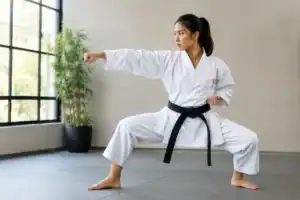
You finish a long workday, change into training clothes, and face the same question: should you head to the weight room or step onto the mats? The adult martial arts versus gym decision is not about which option burns the most calories in one hour. It is about what will challenge you, keep you accountable, and give you a reason to come back when motivation drops.
A commercial gym can be a great tool. Martial arts training can be a powerful one too. The right choice depends on your goals, your personality, and the kind of progress you want to earn.
Adult Martial Arts Versus Gym: The Real Difference
The biggest difference is simple: a gym gives you access to equipment, while a martial arts class gives you a skill to develop under coaching.
At a traditional gym, you can build an effective routine around strength training, cardio machines, classes, or mobility work. For someone with a clear plan and the discipline to follow it alone, that flexibility has real value. You can train early in the morning, late at night, or whenever your schedule allows.
Muay Thai training asks for more of your focus. You are learning stance, balance, footwork, defense, timing, striking mechanics, conditioning, and composure under pressure. The workout is demanding, but it is not random. Every round on the pads, bag, or in controlled partner drills has a technical purpose.
That purpose changes how training feels. Instead of counting down minutes on a treadmill, you may be working to throw cleaner combinations, maintain your guard when tired, or move with more control. Your body gets stronger, but so does your ability to use it.
Fitness Results: What Each Option Does Well
A gym is often the more direct route if your primary goal is maximum strength, bodybuilding, or focused rehabilitation. Barbells, machines, cables, and free weights make progressive resistance training easy to measure. If you want to improve your squat, add muscle mass, or target a specific area, a well-designed gym program is highly effective.
Martial arts classes develop fitness in a more integrated way. A good Muay Thai session can improve cardiovascular endurance, muscular endurance, coordination, rotational power, mobility, balance, and core stability at the same time. You are repeatedly moving, striking, defending, and recovering. That type of effort carries over to daily energy, athleticism, and work capacity.
There is a trade-off. Martial arts is not a replacement for every strength-training goal. If you want to build serious maximal strength or add substantial muscle, lifting should still be part of your program. Many adults get the best results from both: two or three strength sessions each week paired with Muay Thai classes that develop conditioning and skill.
The key is to be honest about what you will actually do. The perfect lifting plan does not work if it leaves you bored after three weeks. The best training method is the one you can practice consistently and progressively.
Calories Matter Less Than Consistency
People often compare workouts based on calorie estimates. That is understandable, but it is not the best way to choose a training environment. Watches and machines can only estimate energy use, and a hard session does not automatically produce long-term results.
Consistency drives change. If learning a real skill makes you look forward to training, martial arts may help you build the regular habit that a gym membership never did. If you prefer training independently with a focused strength plan, the gym may be the better fit. Results come from showing up, working with intent, recovering well, and repeating that process for months.
Coaching and Accountability Change the Equation
Walk into a large gym at peak hours and you will see plenty of people working hard. You will also see people repeating poor movement patterns, drifting through workouts, or avoiding the exercises they need most. Equipment alone cannot correct technique or tell you when to push harder.
In a coached martial arts environment, feedback is built into the session. Your coach can correct your stance, help you generate power safely, adjust training intensity, and give you a clear next step. You are not expected to know everything before you start. Beginners need instruction, not judgment.
That level of attention matters for experienced trainees too. Once the basics become familiar, small technical corrections can make a major difference. Better foot placement, cleaner hip rotation, improved defensive habits, and smarter pacing all add up over time.
Accountability also comes from training beside other people who are working toward their own goals. You do not need to be a fighter to benefit from a fight-sport room. Training partners create energy, structure, and a standard. On the days you would normally skip a solo workout, a scheduled class can be the reason you walk through the door.
Skill, Confidence, and Practical Value
A gym can change how you look and feel. Adult martial arts can do that while also teaching a practical physical skill.
Learning Muay Thai means gaining a better understanding of distance, posture, defensive awareness, and controlled striking. It does not make someone invincible, and responsible training does not encourage people to seek confrontation. What it can do is build calm confidence. You know you have practiced staying composed, listening to instruction, and responding with intention while under physical stress.
That confidence often reaches beyond the gym. Adults who train consistently tend to stand a little taller, handle pressure better, and trust their ability to work through discomfort. The first few classes may feel unfamiliar. That is part of the value. Getting out of your comfort zone in a disciplined setting teaches you that being new at something is not a weakness.
When a Standard Gym Is the Better Choice
Martial arts is not automatically the right answer for everyone. A standard gym may be the stronger choice if you need complete scheduling freedom, want a quiet solo workout, or are following a highly specific strength or physique plan.
It may also make sense if you are returning from an injury and need a program built around medical guidance. The same is true if contact-based training is not appealing. While beginner Muay Thai classes do not require hard sparring, they do involve movement, partner drills, and a willingness to learn in a group setting.
You should not choose martial arts because you think you have to be naturally aggressive, coordinated, or already fit. Those are not entry requirements. Good instruction meets you at your current level and builds from there.
When Martial Arts Is the Better Fit
Martial arts may be the stronger choice when your current workouts feel stale, you struggle to stay consistent alone, or you want your fitness to lead somewhere beyond the scale. It is especially effective for adults who want structure without being treated like a number in a crowded room.
Choose a program that teaches fundamentals, emphasizes control, and gives beginners room to grow. Ask whether coaches correct technique, whether classes have a clear structure, and whether training can be adjusted to your experience level. A serious gym should be challenging, but it should also be professional and welcoming.
At Beltrante Fighting Systems, adult Muay Thai training is built for people who want real coaching, demanding conditioning, and a clear path from first class to lasting progress. You can train for fitness, confidence, technical skill, or amateur competition without needing to fit into a one-size-fits-all model.
Make the Choice by Taking Action
Do not spend another month debating the best workout from the comfort of your couch. Try the environment that interests you, pay attention to how you feel afterward, and judge it by whether you want to return. The right training room will ask more of you than comfort does, then show you what consistent effort can build.