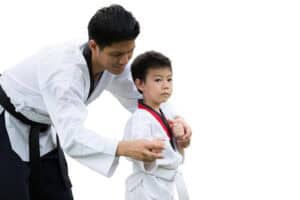
A treadmill can raise your heart rate. A barbell can build strength. But when you are deciding between martial arts or gym workouts, the real question is bigger: what kind of person do you want your training to build? The best program is not the one that looks hardest online. It is the one you can commit to, improve in, and show up for when work, stress, and excuses start piling up.
For some people, a commercial gym is exactly what they need. For others, learning Muay Thai provides the structure, coaching, challenge, and purpose that makes fitness finally stick. Neither option is automatically better. Your goals, personality, schedule, and need for accountability should drive the decision.
Martial Arts or Gym Workouts: The Core Difference
Traditional gym workouts are usually built around physical outputs. You may train to lose weight, build muscle, improve cardio, or lift heavier. Those are worthwhile goals, and a well-designed strength program can change how you look, move, and feel.
Martial arts training develops those physical qualities too, but it asks more of you. You are learning timing, balance, footwork, distance, defense, and composure under pressure. A Muay Thai class is not just exercise with gloves on. You are practicing a skill that demands concentration while your body is working hard.
That difference matters on the days motivation is low. Doing another set of machines can feel optional when no one is waiting for you. Showing up to class means your coach has a plan, your training partners are counting on a productive room, and there is always another technique to sharpen. Skill gives training a direction beyond the number on the scale.
When a Gym Workout May Be the Better Choice
A standard gym can be the right fit when you have a very specific strength, physique, or rehabilitation goal. If your main priority is adding muscle mass, increasing a major lift, or following a program from a medical professional, access to racks, machines, and free weights is valuable.
Gyms also offer flexibility. You can walk in at an odd hour, train alone, move at your own pace, and leave in 30 minutes if that is all your day allows. For experienced lifters who understand programming and enjoy training independently, that freedom works well.
The trade-off is that freedom can become inconsistency. Many people join a gym with good intentions, repeat the same comfortable routine for months, and stop going once progress slows. Without coaching, it is easy to use poor form, avoid challenging work, or train hard without a clear plan.
A gym membership gives you access to equipment. It does not automatically give you instruction, community, or accountability. You have to create those elements yourself.
What Martial Arts Gives You Beyond a Workout
Muay Thai develops conditioning in a way that feels earned. Pad rounds, bag work, technical drills, clinch practice, bodyweight movements, and controlled sparring can challenge your aerobic capacity, speed, core strength, and endurance in one session. You will work hard, but the work has a purpose.
You are also building coordination that carries into everyday life. Good striking requires your feet, hips, hands, eyes, and breathing to work together. Over time, people often notice better posture, body awareness, balance, and confidence in how they move.
Then there is the mental side. Beginners quickly learn that being tough is not the same as being reckless. You have to listen, stay calm, accept correction, and keep practicing when a technique does not click immediately. That discipline is one reason martial arts can be especially valuable for professionals dealing with stress, adults rebuilding confidence, and young students who need a structured challenge.
At Beltrante Fighting Systems, that process is coached rather than thrown together. A serious training environment should make beginners feel welcome without lowering standards. You do not need experience to start, but you do need a willingness to learn, work, and get out of your comfort zone.
The Fitness Results: Calories, Strength, and Conditioning
If fat loss is your main goal, both options can work. The deciding factor is not whether you choose a heavy bag or a stationary bike. It is whether you train consistently and support your work with nutrition, sleep, and recovery.
Martial arts classes can burn significant energy because they combine intervals of high effort with active movement and technical focus. More importantly, many people enjoy the process enough to return several times per week. Consistency beats a perfect workout plan that you quit after three weeks.
For maximum strength, a dedicated resistance program still has an advantage. Progressive overload with weights is the most direct route to improving raw strength and building muscle. That does not mean martial artists should skip strength work. In fact, smart strength and conditioning can improve punching power, injury resistance, and overall athletic performance.
The strongest approach for many adults is not martial arts versus lifting. It is martial arts plus intelligently planned strength work. Two or three Muay Thai sessions and two focused strength sessions each week can build a capable, well-rounded athlete. The exact balance depends on recovery, experience, age, work demands, and whether you are training for competition or general fitness.
Coaching Changes the Equation
The quality of instruction matters as much as the type of training. A crowded fitness class may make you sweat, but sweat is not the same as progress. In martial arts, details matter. The position of your hands, the rotation of your hip, your stance after a kick, and how you manage distance all affect safety and effectiveness.
Good coaching gives you corrections you cannot get from a mirror or a video. It also gives you a path. A beginner should not be pressured to spar before they have basic control and defense. An experienced student should not be stuck repeating beginner drills without a next level to pursue. A coach adjusts the work to the person in front of them.
That same principle applies to fitness. If you have old injuries, a demanding job, or a goal of entering an amateur bout, your training should reflect it. Personalized coaching and small-group attention help you push yourself without treating every body and every goal the same way.
Consider Your Personality, Not Just Your Goal
Be honest about what makes you train. If you prefer solitude, love tracking lifts, and want complete control over your schedule, gym workouts may be your best foundation. There is nothing wrong with training independently when it keeps you consistent.
If you get bored doing the same routine, need a coach in your corner, or want fitness to include a real-world skill, martial arts may hold your attention longer. Muay Thai gives you measurable progress that has nothing to do with body weight. Your jab gets sharper. Your conditioning lasts another round. You stay calmer during a difficult drill. Those wins matter.
Parents should consider this difference for their children too. Youth martial arts offers physical activity, but it also teaches focus, respect, listening, and self-control in a setting where effort is expected. The goal is not to turn every child into a fighter. The goal is to help them become more confident, coordinated, and disciplined.
Start Where You Are, Then Train With Intent
You do not have to arrive in shape before trying Muay Thai. That is backward. A well-run beginner class meets you at your current level and gives you a standard to work toward. Expect to be challenged, expect to feel awkward at first, and expect improvement if you stay consistent.
If you already lift, do not assume martial arts will replace every part of your program. Use it to develop conditioning, movement, and skill, then keep enough strength training to support your body and your goals. If you have only trained in martial arts, adding basic strength work may improve your durability and performance.
The right choice is the one that makes you show up with purpose. Take a class, pay attention to the coaching, and notice how you feel after working harder than usual. Your first session does not need to prove anything. It just needs to give you a reason to come back and earn the next one.