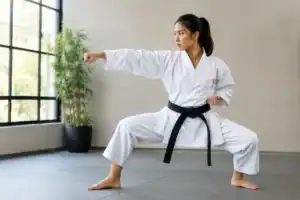
Your teenager may say they want to get stronger, feel more confident, or try something new. What they often need is a training environment that gives those goals structure. This teen martial arts enrollment guide helps parents look past flashy promises and choose a program where their child can build real skills, discipline, and resilience.
Martial arts can be a powerful outlet during the teen years. It gives students a place to work hard, handle pressure, learn accountability, and earn progress through consistent effort. But the right program matters. A good gym will challenge a teenager without throwing them into an environment that is unsafe, disorganized, or built around intimidation.
Start With Your Teen’s Real Goal
Before comparing schedules or prices, ask your teen what brought them to martial arts. The answer does not need to be perfect, but it should guide the search.
Some teens want a better alternative to repetitive gym workouts. Others need more confidence, better conditioning, or a positive way to manage stress. A student interested in Muay Thai may be drawn to the technical side of striking, while another may simply want to feel more capable and athletic. Some will eventually want to compete. Most will not, and that is completely fine.
The best programs can meet students where they are while still holding them to a standard. Your teenager should not need prior experience, elite fitness, or a fighter’s personality to begin. They do need a willingness to listen, show up, and push through the uncomfortable parts of learning.
Be honest about the goal from the beginning. If your teen needs fitness and confidence, a class that spends most of its time preparing athletes for competition may not be the best first fit. If they have serious competitive goals, look for coaching with genuine striking and conditioning experience, not a program that treats fight preparation as an afterthought.
What a Quality Teen Martial Arts Program Looks Like
A strong youth program is more than a room full of kids hitting pads. It has a clear class structure, active coaching, age-appropriate training, and standards that are enforced every day.
Watch how the instructor leads the room. Are students learning stance, balance, footwork, defense, and controlled striking technique? Or are they being rushed into hard contact before they understand how to protect themselves? Good coaching emphasizes fundamentals because fundamentals keep students safer and make them better over time.
There should also be a difference between productive challenge and unnecessary punishment. Conditioning is part of martial arts, especially in Muay Thai. Teens will sweat, get tired, and face moments where they want to quit. That is where confidence is built. Still, training should be scaled to the student’s age, experience, and current fitness level. A qualified coach knows when to push and when to correct.
Look for a gym where respect is visible in the details. Students should pay attention when instruction is being given, work with partners responsibly, and understand that control matters as much as aggression. A disciplined environment does not have to feel cold or overly serious. It should feel focused, welcoming, and purposeful.
Technical instruction should come before intensity
Teenagers often enjoy the energy of pads, drills, and sparring, but excitement should not replace instruction. First, students need to learn how to stand correctly, throw with balance, maintain a guard, and move safely with a partner. Intensity can increase as technique improves.
Ask how sparring is handled, even if your teen is not interested in it right now. The answer tells you a great deal about the gym’s culture. Sparring should be supervised, controlled, and earned through competence. It is a learning tool, not a test of toughness or a chance for more experienced students to overpower beginners.
Visit a Class Before You Enroll
A free introductory class is one of the best ways to judge fit. Do not just ask whether your teen enjoyed it. Ask what they learned, whether they understood the coaching, and how they felt after being challenged.
During a visit, notice whether the coach knows students by name and gives specific feedback. Personalized attention is especially valuable for teens, who can easily disappear in a large class. Corrections like “keep your hands up” are useful, but better coaching explains why: protect the chin, maintain balance, and recover safely after every strike.
Pay attention to the other students as well. A good team will have a mix of experience levels, but beginners should not look ignored or embarrassed. Your teen does not need to become friends with everyone on day one. They should, however, feel that they can train hard without being mocked for making mistakes.
At Beltrante Fighting Systems, students can start with a free class and experience the coaching environment before making a commitment. That first session is not about proving anything. It is about seeing whether the instruction, pace, and culture are right for your teen.
Questions Parents Should Ask Before Signing Up
You do not need to interview a coach like you are hiring a corporate executive, but clear questions help you avoid vague answers and expensive disappointments. Ask about class size, instructor supervision, beginner progression, attendance expectations, and how the program handles contact training.
You should also understand the practical side of enrollment. Find out what equipment is required at the start, whether uniforms are mandatory, and whether there are contracts, cancellation policies, or testing fees. Some programs require more gear as students progress, which can be reasonable, but the costs should be clearly explained.
If your teen has asthma, a prior injury, anxiety, or another concern that could affect training, discuss it directly with the coach. A professional instructor will not make promises they cannot keep. They will explain how they can adjust drills, monitor workload, and help your teen enter training at the right pace.
The right question is not, “Will this be easy?” Martial arts should require effort. A better question is, “Will my child be coached safely and consistently as they work through the challenge?”
Set Expectations for the First Three Months
The first few weeks can be humbling. Your teen may struggle to remember combinations, get winded during conditioning, or feel awkward working with a partner. That is normal. Martial arts exposes weaknesses quickly, but it also gives students a clear path to improve them.
Encourage consistency over instant results. Attending class once in a while can be fun, but regular training is where the physical and mental benefits begin to show. Two or three sessions each week, depending on the program and your teen’s schedule, gives them enough repetition to develop skills without overloading their school, sports, or family commitments.
Avoid measuring progress only by belts, trophies, or how hard your teen can hit. Look for quieter signs: better posture, improved focus, willingness to accept correction, increased stamina, and more confidence in unfamiliar situations. These changes often carry over into school, work, and everyday life.
There may be days your teenager does not want to attend. That does not automatically mean the program is wrong. Learning discipline includes showing up when motivation is low. Still, if they consistently feel unsafe, dismissed, or dread every class after a fair adjustment period, listen closely. A good fit challenges a student while giving them a reason to come back.
Help Your Teen Own the Commitment
Parents should support the process, but teenagers benefit most when training becomes their responsibility. Let them pack their gear, arrive prepared, and speak to the coach when they have a question. Those small habits build ownership.
You can reinforce the values that martial arts teaches at home: respect, follow-through, self-control, and the ability to learn from correction without taking it personally. Do not use training as a threat or a punishment. Frame it as an opportunity they earn by committing to the work.
The gym should be a place where your teen gets out of their comfort zone, not a place where they are pressured to become someone else. With capable coaching and consistent effort, they can leave each class a little stronger, more disciplined, and more certain of what they can handle.