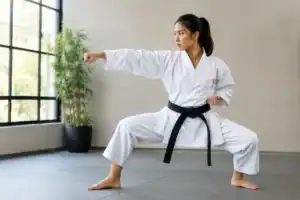
A hard round on the pads makes the answer feel obvious. Your shoulders are burning, your legs are heavy, and your core is working overtime just to keep your balance and throw clean shots. But does Muay Thai build muscle in the same way a structured strength program does? Not exactly. It can build athletic muscle, especially for beginners, but the result depends on how you train, eat, recover, and progress.
Muay Thai is not bodybuilding. The goal is to develop skill, conditioning, timing, power, and composure under pressure. Still, when your training is coached well and performed consistently, it can change the way your body looks and performs. The key is understanding what Muay Thai gives you – and what you may need to add.
Does Muay Thai Build Muscle for Beginners?
For a beginner, Muay Thai can absolutely build muscle. If you are coming from a sedentary routine, inconsistent workouts, or mostly cardio-based exercise, the demands of striking training create a new stimulus for your body.
Every session asks your muscles to do real work. You drive punches from the floor through your hips and torso. You stabilize your shoulder while you punch, frame, clinch, and hold a tight guard. You load your legs to kick, knee, check kicks, change stance, and stay balanced when someone is pushing back. You brace your core through nearly every movement.
That repeated demand can lead to noticeable development in the shoulders, upper back, arms, core, glutes, and legs. Many people also look leaner after several months of consistent training, which can make existing muscle more visible even if they have not gained a large amount of new size.
The early gains are real, but they do not continue forever at the same pace. As your body adapts, simply doing more rounds does not guarantee more muscle. That is where many people get frustrated. They train hard, sweat heavily, and improve their conditioning, yet their physique stops changing the way they expected.
What Muscles Does Muay Thai Train?
Muay Thai is a full-body activity, but it does not load every muscle equally. Your lower body and trunk do a tremendous amount of work because clean striking starts with balance, foot position, hip rotation, and force from the ground.
Your legs and glutes generate power for kicks, knees, stance changes, and explosive movement. Your core transfers force between the upper and lower body while keeping you stable during strikes and defense. The shoulders, triceps, chest, and upper back work repeatedly during punching, hand fighting, pad rounds, and clinch positions.
The clinch is especially demanding. Holding posture, controlling inside position, pulling an opponent off balance, fighting for head position, and throwing knees taxes the upper back, grip, arms, neck, and core in a way most standard gym workouts do not.
That said, Muay Thai is usually better at building muscular endurance than maximum muscle size. You may be able to throw strong strikes late in a round, maintain your guard, and move with more control. Those are valuable physical adaptations. They are just different from gaining several pounds of mass in your chest, back, or legs.
Why Muay Thai Alone Has Limits for Muscle Growth
Muscle grows best when it receives progressive overload: a reason to keep adapting over time. In weight training, that might mean gradually increasing weight, reps, sets, range of motion, or control. It is easy to track.
Muay Thai has progression too, but it is less direct. You might hit harder, move better, spar with more composure, or complete more rounds. Those are major wins. Yet the resistance placed on your muscles is not always increasing in a predictable way from session to session.
There is also a recovery issue. A serious Muay Thai session can burn a lot of energy. If you train several days a week but do not eat enough food, especially enough protein and carbohydrates, it becomes difficult to add muscle. Your body needs fuel to recover from pad work, bag work, drilling, clinching, conditioning, and sparring.
The same is true if you are training too hard without enough sleep. More effort is not always better. A fighter preparing for competition may accept a high workload because performance and weight management are the priority. Someone whose main goal is to build muscle needs a plan that leaves room for recovery and growth.
How to Build Muscle While Training Muay Thai
If you want the skill and conditioning of Muay Thai plus a stronger, more muscular body, combine your training with focused resistance work. You do not need to live in a weight room. Two or three well-designed strength sessions each week can make a major difference.
Prioritize compound movements that support your sport: squats or split squats, deadlift variations, presses, rows, pull-ups, carries, and controlled trunk work. These movements build the legs, hips, back, shoulders, and core that help you strike with more force and maintain better positions in the clinch.
Keep the goal simple. Choose a few movements, use solid technique, and gradually improve your performance. You might add a small amount of weight, complete another rep with clean form, or control the lowering phase better than last week. That is how you give your body a clear reason to build muscle.
Nutrition matters just as much. Aim to eat enough total calories to support your activity level and include a quality protein source at each meal. A practical target for many active adults is roughly 0.7 to 1 gram of protein per pound of body weight per day, adjusted to your appetite, goals, and individual needs. Carbohydrates are not the enemy here. They help you train hard, recover, and keep your sessions sharp.
You also need to be honest about your schedule. Training Muay Thai five or six days per week, lifting hard three days per week, and sleeping six hours per night is not a long-term plan for most people. Start with a workload you can recover from, then build gradually.
A Practical Weekly Setup
For many adults, three Muay Thai sessions and two strength sessions is an effective starting point. You get enough technical repetition to improve your striking while still giving your muscles a consistent growth stimulus.
A sample week could include Muay Thai on Monday, Wednesday, and Saturday, with strength training on Tuesday and Friday. Keep one day fully off or use it for easy mobility, walking, and recovery. If sparring or hard clinch rounds are part of your schedule, reduce the lifting volume that week rather than trying to force everything at maximum intensity.
Your Training Goal Changes the Answer
If your goal is fat loss and athletic definition, Muay Thai may be enough when paired with sound nutrition. It is demanding, engaging, and far more interesting than spending every workout on a treadmill. As body fat comes down, your shoulders, arms, legs, and core may look more defined.
If your goal is to gain significant size, Muay Thai should be one part of the plan rather than the entire plan. Strength training and a calorie surplus will matter more. You can still train the art, but you may need to manage conditioning volume so you are not burning through all the fuel needed to grow.
If your goal is better fight performance, the best approach is more specific. You need technical Muay Thai practice first, then strength and conditioning that supports your ability to strike, defend, clinch, and recover between rounds. Chasing muscle size at the expense of speed, mobility, or endurance is not smart fight preparation.
At Beltrante Fighting Systems, training can be adjusted to where you are starting and where you want to go. A total beginner does not need to train like an amateur fighter, and an aspiring competitor should not follow the same plan as someone trying to get stronger after work. Good coaching recognizes the difference.
Train for More Than the Mirror
Muscle is useful when it helps you move better, hit with control, stay durable, and carry yourself with confidence. Muay Thai gives you a reason to build that strength and test it in a disciplined setting. Show up consistently, learn the details, add resistance training when your goals call for it, and give your recovery the same respect you give hard work. Get out of your comfort zone, but train with a purpose.